Showing posts with label nucs. Show all posts

Tuesday, July 26, 2016

Live From The Honey House!


Deep boxes and frames ready for creating new hives


Well, okay, the honey house is in our dreams, but one day...!

It’s been a busy week with the bees. On Saturday, we had to prepare the hives for re-queening. This year, we are trying to requeen with queen cells, rather than using proven queens. It just stretches our ability a bit further, and since we have a wonderful source for queen cells right now, we will use it.

Unloading full honey supers from the second bee yard.

Preparation meant cleaning out the queen castles that we had prepared in the spring, moving those hives to the large deep boxes so they can have a regular hive, and getting some new frames from some of the other hives, including the Hawaiians, to use as a foundation for the queen castles again. Doing this will add to the number of hives we have once more – essentially creating splits. When we clean out the queen castles, we open one nuc at a time. These nucs consist of three frames each. We check them to see that there is new brood on the frames; this means there is an active queen in that nuc. We check the pattern she is using for laying her eggs – we want to see almost every cell filled with larvae, with the odd open spot. Too many open spots or random clumps means that she is not as strong as she should be.

One-way screens allow the bees to get out of the honey super,
but not back in.

We take those three frames and move them into a separate deep box, add some more empty frames (preferably ones that have already got some built up comb on them, though) and those hives are ready to go. The three-frame area is just not big enough, so now they will have room to grow.


With the queen castles empty, we then went to the other hives that were already established. They need to be checked regularly anyway, so now was the time (despite the bees being especially peeved at us, and letting us know! It was a 9-sting week!). Hives that were especially strong donated one or two frames to restock the queen castles. We added queen cells to those queen castle nucs the next day and will check them in about a week. Hives that were not as strong donated more frames to the castles and were marked to get a new queen as well. We had three of those, and the queen cells were put in on Sunday.

Hot days and crowded hives lead to
a lot of bearding on the outside.


While we were out there getting stung anyway, we decided to put in the one-way screens between the honey supers and the hives. This would allow the bees in the super to get out, but no more would be able to go back in, leaving them empty (or almost empty) for us to extract the honey. We pulled the supers and set them in the shop to warm up, making extraction easier. We also pulled and extracted the Ross Rounds; our bees did a beautiful job of these, and we are very excited to have more next year.

Extraction was earlier this year than last, (mostly because we ran out of honey supers so had to empty what we could so they can go back on the hives) and the end product is incredible. The honey has a wonderful dark color and a rich taste with locust and floral undertones. It runs nicely, and is nowhere near as thick as last year – thankfully – because of the less arid conditions this year. The bees and Mother Nature were smiling on us in 2016.

We will have one more extraction to do later in the year, hopefully, so our honey buckets are full again! Woo hoo! 
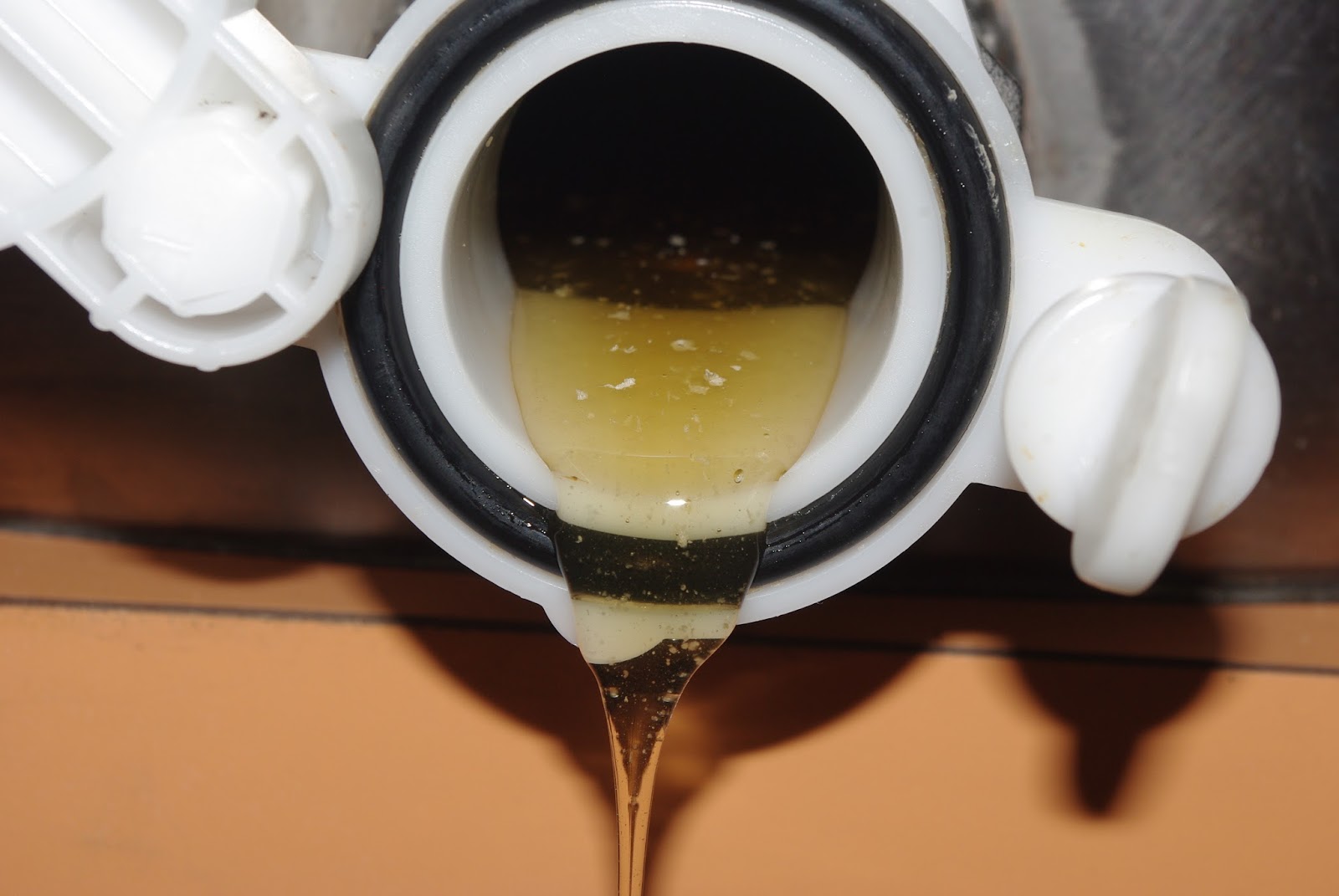
Here comes the honey. The white flecks are wax from the comb
totally harmless (actually, very healthy) so we filter it out. 

I don't always put honey in my tea, but when
I do, it is fresh from the hive! 

Full Ross Round frames!!

This is the honey in the comb, a delicious delicacy. (Ross Rounds)

This is a very full frame of honey, the first of many!


Saturday, May 28, 2016

There’s Another and Another and Another...

Our 'Swarmy' Hive.. doing very well, thank you!

When we talk bees, we tend to talk in big numbers. There can be anywhere from 10,000 to 60,000 bees in a hive (they typically start at 10,000 when you purchase a ‘package’ of bees). We can go through 100 pounds of sugar in no time, and we get several hundred pounds of honey... and that’s just with a few hives. Hives, however? Now that is something we can count, and our numbers are growing.


A queen castle with three separate nuc chambers.


After the excitement of the swarm earlier this week (yes, all our bees are back home, in a new hive box, and doing swimmingly!) we decided we needed to be a bit more proactive in what we are doing. As we said last time, we ended up with the swarmed hive back as a new hive, we used some of the other swarm cells in that same Mellow Yellow hive to create two new nucs, and we had already split one hive because it was getting too full and we had a spare queen. That put us four ahead.


A Queen cell without the protector.


Today, we added 10 new queen cells, to create 10 more new hives! That would mean we went from 7 to 21 in two months (if they all work). We definitely can’t complain about that! We had hoped to be able to just add some new queens, but there is a shortage of queens. They are definitely a hot ticket item (and one that we will have to research more so we can start to create our own queen cells). The advantage of adding a queen, as opposed to a queen cell, is that when you purchase a queen, she is ‘proven’, meaning she has taken her maiden flight, and has already started to produce eggs. We could also purchase ‘virgin’ queens, which have been hatched and are alive, but still have
The Queen cell with the protective cover in place.
to leave the hive to do a maiden flight, so could fall prey to a bird or other hazard. When you get a cell, although much less expensive, there is no guarantee of what will come out of there when she finally emerges. The supplier for our queen cells, however, is local, and has a very good success rate with his queens, so we are fairly comfortable trying this route.

While some beekeepers are comfortable just dropping a queen cell into an established hive, we didn’t want to do that, especially since we have just added some new queens to the hives. Instead, we went a different route, taking some capped brood from some hives, some honey from others, and, of course, a smattering of bees to attend the queen, the honey supply and the eggs. They are the elongated cells just like you would see on the frames of brood, but they are alone. We put them into little cages that allow the queen to emerge, but that will prevent anyone else from hurting her, should a queen somehow have slipped past us.

Putting the Queen cell into the Queen Castle nuc.
For practicality purposes, we do not want to use one of the big hive boxes (’10 frame deeps’) for this, because it would give them way too much room to be rattling around in. That much space is hard to keep warm if the temperatures drop, and has too much space inside to cool if the temperatures outside spike. Temperature is very important in the production of bee cells, but fortunately the bees know what to do to maintain it where it should be – we just want to make it as easy as possible for them so they are able to do other things, like make honey and tend to brood. For this reason, we need to start with smaller hives and/or smaller frames. Our compromise to that is to use the same sized frames, but to use only three of them per nuc and to separate the box into three equal pieces (called ‘queen castles’). This means we can put three frames into each nuc. One frame will have food on it – syrup, pollen, honey. This is important because we have to lock all the bees in for five days, ensuring that the foraging bees will not just return to their old hive. One frame will have some capped brood, so that the new brood will hatch and strengthen the hive. We will also include all the bees that were on the frame of brood. This will give them plenty of time and potential to establish a strong hive. 

Closing the lid on one of the three Queen Castle chambers.
Once we open the doors again, the foragers will re-orient to their new hive, returning to it with their provisions. The queen should have hatched by then, and will go on her maiden flight, and within two weeks from today, we should have hives that are abuzz with activity and life. That’s the plan, anyway.

We’ll know in two weeks if it worked. An 80% success rate (meaning hopefully for us 8 new hives) would be a huge win. 


Always have the smoker handy! 

Tuesday, May 24, 2016

Bee-pocalypse


Our FlowHive, ready to go. 
This blog was going to be about setting up our hives in our second bee yard, or about the new boxes we created that will house three nucs in one, or we were going to talk about setting up, yes, the new Flow Hive that comes complete with honey tap on it... but apparently our bees had different plans for us.

There are a LOT of bees and honey in that hive!


First, we should say that all the hives are doing well. The new queens we added seem to be very happy and very busy. We are watching new orientation flights happening outside the hives daily. The bees are producing honey, and our raspberry patch is absolutely abuzz as they work there, drawing pollen. They were doing so well, producing so much honey and so many news bees that...

Queen cells. 


Yes, today the Mellow Yellows were feeling less mellow, and decided that, after three days of rain, they would take advantage of the sunshine – they swarmed. For those of you not familiar with bees, in the spring, when the hive gets busy and strong, healthy queens start to produce a maximum output to keep up with the demands of the honey production, the hive will get too crowded. When that happens, those pesky nurse bees will pick out some of the best newly laid larvae and will start to pack those cells with lots of royal jelly, making the baby bee grow into a potential queen. These are relatively easy to spot on the frames because they are very long cells.

Mellow Yellow hive... very very full!
The idea they have is that if they make enough of these cells, the one that is the strongest will hatch first, kill the other wanna-be queens while they are still in their cells, then go on the hunt for the reigning queen. No hive wants two queens, but it is thought that the reigning queen knows what is happening, is aware of the new queens being produced, and starts to work gathering her loyal workers so that they will leave together to start a new colony. In this way, she leaves a legacy – another hive. She has opportunity to kill the forming queen cells, but she won’t. Isn’t nature amazing?  

The swarm starts! All those little yellow dots? Bees!
When we looked out the window late this morning, and saw a cloud of bees hovering over the bee yard, we knew exactly what was happening! It was exciting to see how they started and what they did (after reading about swarms and having a swarm land here several years ago), but it was infuriating and a bit disheartening to know that all those bees, and the value therein, were leaving. Fortunately we were able to watch where they went, and once they started to gather and beard around the queen, we were able to shake the tree branch they were on, and get the bees into a bucket then into a new hive. It took several trips, but we ended up with most of them tucked away. We’re not sure we’re out of the woods on this one yet, but tonight the hive was active, so we slipped in a frame of larvae for the bees to tend to. It will help to keep the bees in there, because they will not abandon uncapped larva, but is also a bit of insurance in the event the queen was injured, stressed or killed in the move (damn, those birds and their appetites), because the hive can now use those larvae to create more queen cells.

The swarm rises higher and starts to move. 


On examination of our other hives, we found more ‘swarm cells’ – new queens in the making – in the Mellow Yellow hive. The new queen hadn’t yet gotten around to killing them, so we pulled those frames, added some other frames (with honey and pollen) from other hives, and set them up as nucs. In a week or so, we will know if this worked as well.


The swarm gathers on a branch about 14' in the air.
So, to recap, we will write about the other bee yard and the Flow Hive later (we promise) but today we got to see a swarm actually happen, got to capture (recapture?) a swarm, and may have come out three hives ahead. It was, all in all, a memorable day in our beekeeping world.  


The new hive. The bees are flapping their wings, signalling to
other hivemates, letting them know where their new home is.
(at least, we hope they are right about this!)


Sunday, February 8, 2015

Taking Care of Beesness

We have talked about what bees do in winter in Canada, but what about the beekeepers? How do they spend the winter? While it’s not all work, there are still some critical things that need to be done.

First, because we need to be ready for spring, we build bee boxes for new hives. We have some new bees coming next year, but we also have to be ready for the hives that might want to split up, getting some into new hives before they swarm and we lose them. We will be adding 5 new hives in the spring, 3 packages from New Zealand, and 2 local nucs. We’ve done our homework, and have some of the best, oldest strain of bees coming – who knew bees had pedigrees? They aren’t as detailed as the American Kennel Club, but there is definitely some advantage to knowing a bit of the history of your bees.

Squaring up the boxes.
To make sure we have enough for this year – the five new ones and whatever splits we may get from the ones we already have – we created 24 boxes, so 12 new hives. We don’t expect that we will fill them all, but we can dream. It’s assembly line work to make them, but with all hands working, they’re stacked and ready to roll. We’ve decided that each year will be assigned a color, so we can keep track of when they arrived. This year, will be The Motley Blue. Each hive is a different shade, so hopefully we will be able to tell them apart.

Another thing we do in the winter is learn more about our bees. We want to start raising our own queens, so we have been studying that process. Next year we should have a lot more honey, so we need to figure out where we can sell it and how to promote it. To that end, we have spent the winter discussing (okay, arguing) about a name for our apiary. Suggestions are welcome!

While thinking about what to do with the honey, we have also done some product testing at home – we need to have some fun, right? We’ve made some mead, using our own honey, our very pure wonderful, natural water, and our own fruit. We spray nothing, and are far enough removed from spraying that we are very comfortable with all our produce being organic. We have made some plain honey mead, some raspberry honey mead, some blackberry honey mead, and some peach honey mead. This year was just small batches, so we can see how it tastes before we do anything more. It is already bottled, and needs to sit like that for several months before it will be ready. We’re also trying our hand at some honey lager beer. No kits or store bought shortcuts, though. We used hops, malted barley, and honey, sparged our wort, and soon it will be heading to the carboys to finish up. It should be wonderful for the summer.

The Motley Blue

We have been planning on something to do to help our bees as far as gardening. You may remember that we were originally avid gardeners. Now we want to have plants that will complement and accommodate the bees. We’re thinking lavender and clover. We won’t be putting in five acres of either, but we may start with a few hundred plants, just to see how it goes. We also will be looking at adding some monarda (bee balm) for the little ladies, and hopefully they’ll like the herbs we keep every year.

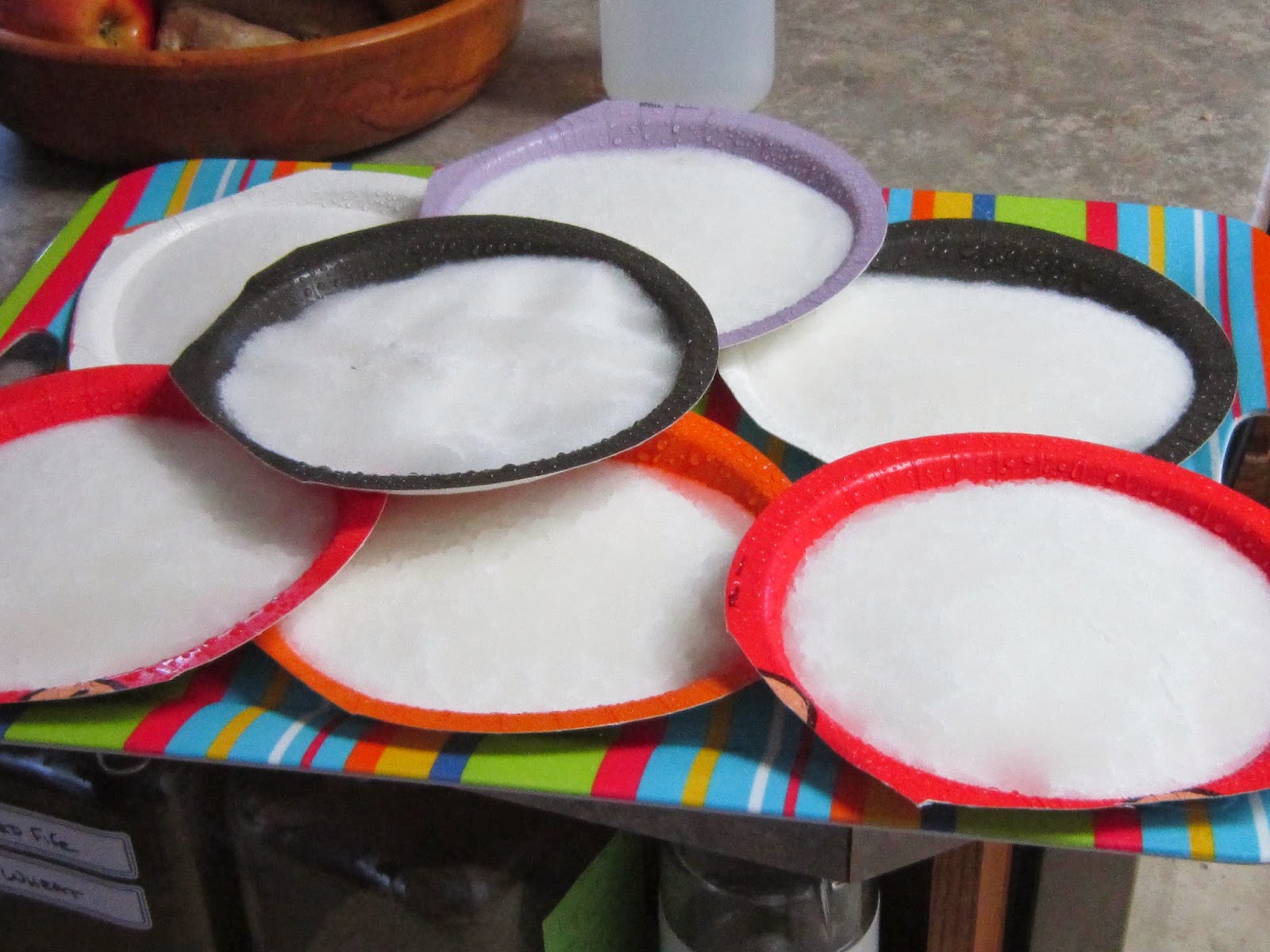
Plates of misted sugar.

We also still take care of the bees. This time of year can be tricky. They are starting to lay, starting to become active again, and their stored food could be growing sparse, so today we helped them out with plates of misted sugar – not sugar water, and not dry sugar, but misted so that it is sticky. If we had left it dry, they may think granules are dirt and set to work getting it out of there once the temperatures warm up some more. The sugar will also take on some of the humidity from the hive, and should hold them until temperatures are warm enough that we can put sugar water out for them. If course, once we reach summer, they don’t need us to give them anything in the hive; they want the entire inside for brood and honey. In a month from now, when we know that our temperatures are a bit more consistently warm, we will give them some protein patties, and let them get ready to bulk up and really get to work.

When we opened the hives today to put in the plates of misted sugar, we were able to see how our little bees were doing. They were very active today, flying around a lot. The Dregs, Gang Green and Pistachio were all doing well. There was some activity, and lots of bees taking flight. Moody Blue is a bit of a concern. We didn’t see any bees going in or out, and when we lifted it, there was very little activity. The White Outs, however, were crazy full and busy, creating comb and cleaning house. Because it is so full, the humidity is high and could be a problem. There was some mould around the edges, of the lid, so we cleaned out the doorways and hopefully they will get some air in there to dry it out a bit. Humidity is a much bigger problem than the cold is. Team Tangerine has been a concern for several months now, but it seems to be doing okay. It wasn’t nearly as full or active as the White Outs, but they are definitely holding their own. Mellow Yellow, as always, is going strong, lots of bees, lots of buzz, and hopefully this summer, lots of honey – barring issues again with humidity.
The White Outs! That's a LOT of bees! 

They're already going for the sugar. 

Mellow Yellow is also full to bursting. 

Giving sugar to the Gang Green.

Food for The Dregs. They're getting busy making honeycomb.
The Moody Blues. This one is a concern. We don't know where the bees have gone. 


Mellow Yellow has so many bees we had to push them aside to get the plate of sugar in there. 


Friday, June 27, 2014

Schrodinger's Bees?


The Dregs, sitting and chilling on their front porch.

It's been five days, and we just couldn't wait. Bees were coming, bees were going, which was good, but not enough to satisfy our curiosity. We needed to know what was going on inside The Dregs. This is the one problem with bees and beehives -- you can't see inside them without lifting the lid. Like the famous cat of Schrodinger fame, they could be alive or dead, but without looking in the box, we would never really know.


Lots of capped brood and Queen cells at the bottom.
Once everyone was suited up, that was exactly what we did -- and we could not beelieve what we saw! We were hoping that by taking uncapped brood from other hives, the new hive would be able to create some Queen cells so they would have the required egg-layer to keep the hive alive. Alive? That would be an understatement! They did create a Queen cell... then another... then another. Actually, we counted 27 Queen cells on the middle four frames, and they have been working on every frame in the hive. They also went through all their juice; it was bone dry. The Queen cells are distinctive because of their long shape and bigger size. Usually the brood cells are capped flush with the frame. Only one Queen will go on to rule the hive. When she comes out of her cell, she will chew through the other Queen cells and kill the growing Queens inside. The Queen in this hive will spend a lot of time chewing those other cells!

Textbook Queen cell on the bottom right end... the really long one!
So, now comes the new dilemma. Do we try to split it again, taking the three frames with Queen cells and putting them into a hive each, robbing some brood and eggs from the other hives, or do we not get greedy in the creation of new hives? We were more than content to end the year with 5, especially considering that we had only planned on 3 when we started out. We already are up one -- a bonus hive. Do we push our luck and see if we can take this year to establish the hives, then let them do their honey thing in full force next year? Looking out the window and seeing the rain, I can't imagine the bees will want to be doing much of anything in this cold, so perhaps letting them make a new hive or two might not be a bad idea after all.
More hired help. They will eventually get paid... in honey.
More Queen cells, these all over the frame. The bees will pick any cell that has an egg that is the right age when they don't have a Queen. 

Sunday, June 1, 2014

Ain't MisBeehavin'


Well, our bees are certainly earning their keep... at least the Mellow Yellows are. Team Tangerine has some catching up to do! We checked the hives this afternoon, peeking into the top box first, and we were very happy with what we saw.

TT is creating comb on the top box, and there are some cells with larvae. They have gone through their protein pad and their juice jug was empty, and we decided to leave them that way for a while. There are so many plants in bloom that they will not go hungry. They seem to have taken a shine to the burning bush, which is in bloom right now. We wouldn't have known it was in bloom (because the flowers are very nondescript) if it hadn't been for the bees gathered around it. The trees out front are just starting to bloom now, and those will keep the bees more than well fed. TT had an increased population of bees, and new ones are doing the dance outside the hive daily, but we don't need to add another box to their stack yet, and we didn't open their doorway more.

As always, the Mellow Yellows were next, and wow! They have comb and are laying a lot of babies in most of the frames in their second box, and in the lid as well. There were a LOT of new bees... enough that we had to smoke them a bit more to calm them, and enough to make us give them a bigger door to go in and out. We were so surprised by the progress made in the top box that we just had to open it up and see what was happening in the box below. The comb down there is darker, and gets even more so with each brood of babies they hatch out. They are busy filling out that comb with honey... LOTS of honey. (Now comes the fun of keeping the wasps and hornets away, and man, do we have those again this year.) Mellow Yellow's amazing progress probably means they will be getting a new box again by next weekend, and will be three boxes tall with a medium depth one for honey on top. The experienced apiarists in the area tell us that peak honey flow usually happens around the summer solstice, so we are just in time.

We will also be starting three new hives this week. Finally, we will be receiving our first 'nucs'. It took a long time for the bees to be ready to breed because of the very cool and wet May weather, but we will finally have some local home-grown bees of our own. They get handled differently (at least as far as introducing them to the hive goes) so this will be yet another new experience for us.

We also have another bee suit, so if you're interested in seeing what we're doing, you're welcome to suit up and have some fun. This way, you get a front row seat for all the action. While we were working with the girls today, we had another guest show up -- a rhinoceros beetle, which isn't supposed to be here in June, but we weren't complaining.

We'll include some pics of the honey cells, the frames loaded with pollen, and one that has a really amazing picture of the bees' tongues -- yeah, they have tongues! Who knew?