Showing posts with label honey. Show all posts

Tuesday, July 26, 2016

Live From The Honey House!


Deep boxes and frames ready for creating new hives


Well, okay, the honey house is in our dreams, but one day...!

It’s been a busy week with the bees. On Saturday, we had to prepare the hives for re-queening. This year, we are trying to requeen with queen cells, rather than using proven queens. It just stretches our ability a bit further, and since we have a wonderful source for queen cells right now, we will use it.

Unloading full honey supers from the second bee yard.

Preparation meant cleaning out the queen castles that we had prepared in the spring, moving those hives to the large deep boxes so they can have a regular hive, and getting some new frames from some of the other hives, including the Hawaiians, to use as a foundation for the queen castles again. Doing this will add to the number of hives we have once more – essentially creating splits. When we clean out the queen castles, we open one nuc at a time. These nucs consist of three frames each. We check them to see that there is new brood on the frames; this means there is an active queen in that nuc. We check the pattern she is using for laying her eggs – we want to see almost every cell filled with larvae, with the odd open spot. Too many open spots or random clumps means that she is not as strong as she should be.

One-way screens allow the bees to get out of the honey super,
but not back in.

We take those three frames and move them into a separate deep box, add some more empty frames (preferably ones that have already got some built up comb on them, though) and those hives are ready to go. The three-frame area is just not big enough, so now they will have room to grow.


With the queen castles empty, we then went to the other hives that were already established. They need to be checked regularly anyway, so now was the time (despite the bees being especially peeved at us, and letting us know! It was a 9-sting week!). Hives that were especially strong donated one or two frames to restock the queen castles. We added queen cells to those queen castle nucs the next day and will check them in about a week. Hives that were not as strong donated more frames to the castles and were marked to get a new queen as well. We had three of those, and the queen cells were put in on Sunday.

Hot days and crowded hives lead to
a lot of bearding on the outside.


While we were out there getting stung anyway, we decided to put in the one-way screens between the honey supers and the hives. This would allow the bees in the super to get out, but no more would be able to go back in, leaving them empty (or almost empty) for us to extract the honey. We pulled the supers and set them in the shop to warm up, making extraction easier. We also pulled and extracted the Ross Rounds; our bees did a beautiful job of these, and we are very excited to have more next year.

Extraction was earlier this year than last, (mostly because we ran out of honey supers so had to empty what we could so they can go back on the hives) and the end product is incredible. The honey has a wonderful dark color and a rich taste with locust and floral undertones. It runs nicely, and is nowhere near as thick as last year – thankfully – because of the less arid conditions this year. The bees and Mother Nature were smiling on us in 2016.

We will have one more extraction to do later in the year, hopefully, so our honey buckets are full again! Woo hoo! 
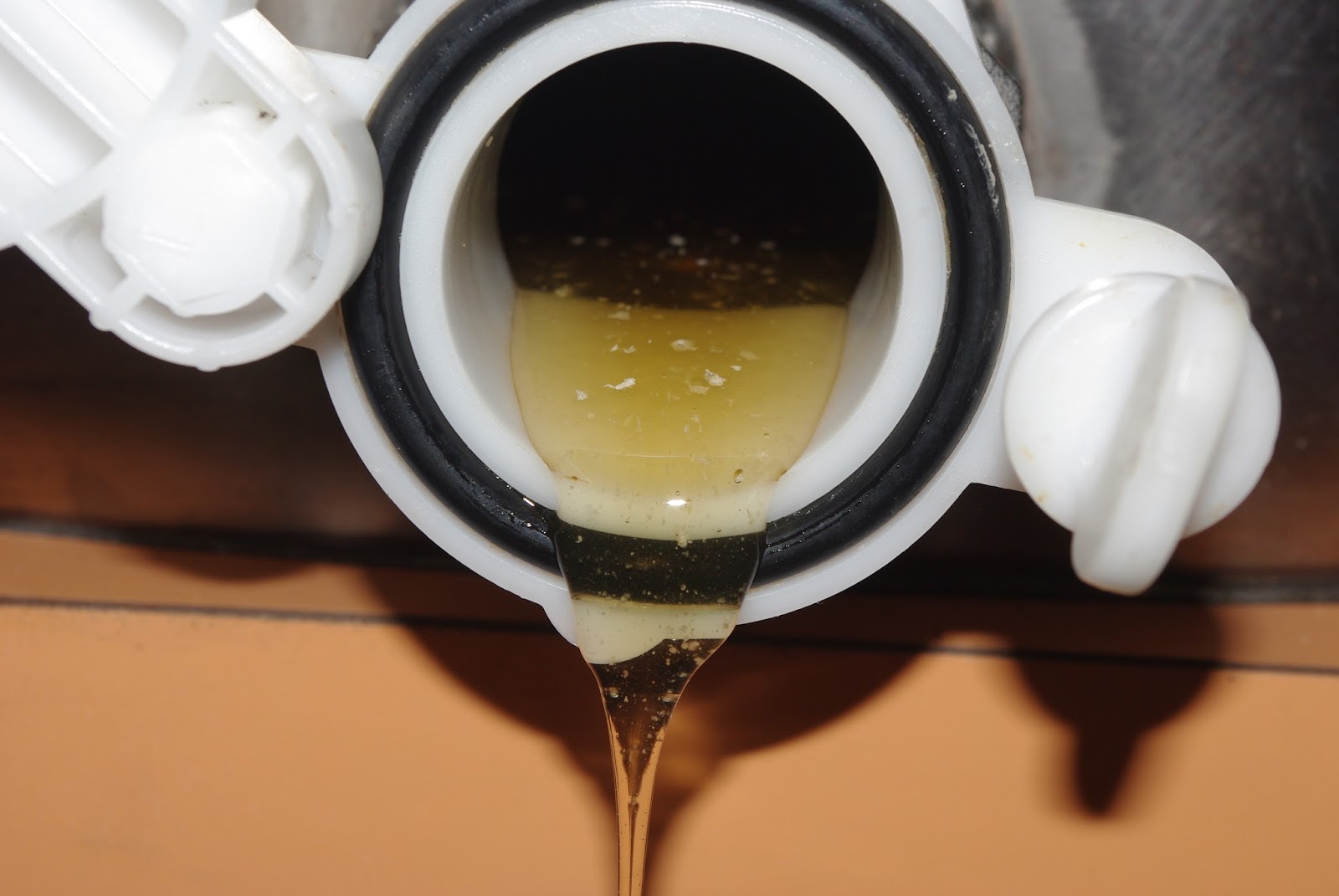
Here comes the honey. The white flecks are wax from the comb
totally harmless (actually, very healthy) so we filter it out. 

I don't always put honey in my tea, but when
I do, it is fresh from the hive! 

Full Ross Round frames!!

This is the honey in the comb, a delicious delicacy. (Ross Rounds)

This is a very full frame of honey, the first of many!


Saturday, August 30, 2014

WE BEE HARVESTING HONEY


Well, it’s finally that time of the year, a first for us, hopefully of many. It’s apparent that our bees didn’t read The Introduction to Bee Keeping book where it said that they should not produce any surplus honey in their first year. We’re sort of happy they didn’t.

We started the morning by pulling the honey supers off the hives. Last week we had condensed them down, taking the empty frames out of the lower supers and replacing them with ones already filled with honey from the ones near the top. We also pulled 10 frames that were totally filled and capped. Well done, little bees. The bees cap the honey when the moisture content is below 18%, which is when the honey is about perfect, and will naturally store with nothing else done to it. They know what they’re doing.

Once the rest of the honey supers were pulled, and the bees (angry bees, they were) were evicted from the frames, we started treating them to get them ready for winter. Varroa mites are one of the new major problems for bees, and they must be treated before they tuck away for winter. These parasites feed on the bees and on the brood, weakening and eventually killing the bees and the hives, especially over the winter. We wanted the honey out of there first, even though the treatment for the bees is not supposed to harm it. It’s a natural, organic treatment that is heated and the vapors are let off in the hives. This will have to be done two more times before they bees are ready for winter.

We then started the fun of extracting honey. With so few hives, we were able to borrow an extractor. I’m not too sure we would want to use this hand-crank one if we had twenty hives to pull honey from, but today it worked well. Thanks, Smiley.

We put the frames where they would warm up. This is a much easier process with them in an area that is above 80F. We then took the caps off, trying a couple different methods. For us, using a warm sharp knife worked best. This exposes the honey in the comb. We then put two frames into the extractor, and start them spinning. It takes 150 turns to pull the honey off each side of the frame using centripetal force. We then turn the frames inside the extractor and do it again. At 300 turns per two frames, ten frames per super honey box, and six honey supers full, we did a LOT of cranking today.


The honey comes out the chute near the bottom of the extractor, to be gathered in a filter bag that pulls out the little pieces of comb that might still be there. It drips into food-grade 5 gallon buckets that are 
sealed up until we are ready to take care of the honey in them. We let it clarify for a day or two then we put it into sterilized jars. We will have a LOT of jars of honey by the end of this week.  

This is what it was all about… well, sort of. The honey tastes wonderful. It won’t be processed or pasteurized, so it will retain all its wonderful healthy and healing properties. Of course, there is an absolute need to test the honey as it comes out of the extractor (and we certainly ended up with sticky enough hands), and it was wonderful. 

We learn more every day, and now we know that when we build our ‘honey shack’ – something on the Technicolor wish list – it will have a sink and running water in it. We may try next year to catch some of the pollen for a while, and we will add some more hives next year. For this one, we need to finish up treating them, and bedding them down after the first frost. Stay tuned, then cross your fingers that they have a good winter. We’ll blog later about how we prepare them for the almost 6 months of inactivity that they will endure, and why it’s such a nerve-wracking time for a beekeeper. 


Sunday, June 15, 2014

More NooBees Are Here


Yes, they arrived last week… the Moody Blues, Pistachios, and the White Outs. These are our first nuc hives – they are made of cells started in other hives, where the Queen is established. The frames are transferred into the new hive, complete with queen, to set up a new colony. This is supposed to be a faster way to establish a colony, so it will be interesting to see how they do in comparison to the other two already here. These bees have many generations of being bred locally and are supposed to be well adapted to our environment.


The bees in the new hives seem… different. We wouldn’t say they are more aggressive, but perhaps a bit easier to excite. They certainly let you know that they don’t really appreciate you peeking into their hives. They were set up with protein pads and juice, and we’ll see how they do. As happened with the first two hives, there is one that seems stronger (The White Outs) and one that seems to be lagging (Pistachios), but as we’ve learned from Mellow Yellow and Team Tangerine, they tend to do things their own way in each hive, at least a little bit, so we count no one out yet, even if they seem a bit slower coming out of the gates.

When we checked on Team Tangerine, we found an interesting (and perhaps concerning and perplexing at the time) discovery. There were some ‘new’ cells at the bottom of a middle frame, longer and much bigger than the other larvae cells. There were three of them, which removed any doubt about what they were – new Queen cells. Team Tangerine wanted, or needed, a new Queen, so they set to work and created one. By the time we found them, all three were opened. When the hive does this, it’s because there is a problem with the Queen – she is too old, she is sick, she isn’t able to lay eggs… so the hive, knowing that the Queen is vital to survival, takes matters into their own hands. The new Queen, when she hatches, will eat her way out of the cell. She then goes to the other two Queen cells, rips them open and kills the Queens in them. She then has to go on a ‘mating flight’ outside the hive… she finds drones from another hive to mate with. This is the only time she will leave the hive. Once she returns, she will spend the rest of her life laying eggs.

While all this has been happening, we noticed that there was no egg production in the hive (since there wasn’t a laying Queen for about two weeks). Instead, because bees are nothing if not busy, they have put all their energy into creating honey. Though they were lagging behind The Mellow Yellows in bee production, they are leaving MY in the dust when it comes to filling their comb with sweet wonderful honey. Some of the frames, when lifted, are nearing 20 pounds in weight with bees and honey.

The discovery of the Queen cells was disconcerting because it can be an indicator that the hive is about to swarm, leaving here and finding new digs to call home. All evidence though indicates that this was because they needed a new Queen, and it was done with typical bee-ish textbook proficiency.


As for the Mellow Yellows, they grew into a third box. Yes, we have our first honey super, three boxes high, with the top box waiting to be filled with nothing but honey, just in time for peak honey production season. 


Here is the Queen cell. You can see how she chewed a flap open so she could get out. She then ripped open the other two so she could kill the Queens developing in them


LOTS of bees now in this hive!

Sunday, June 1, 2014

Ain't MisBeehavin'


Well, our bees are certainly earning their keep... at least the Mellow Yellows are. Team Tangerine has some catching up to do! We checked the hives this afternoon, peeking into the top box first, and we were very happy with what we saw.

TT is creating comb on the top box, and there are some cells with larvae. They have gone through their protein pad and their juice jug was empty, and we decided to leave them that way for a while. There are so many plants in bloom that they will not go hungry. They seem to have taken a shine to the burning bush, which is in bloom right now. We wouldn't have known it was in bloom (because the flowers are very nondescript) if it hadn't been for the bees gathered around it. The trees out front are just starting to bloom now, and those will keep the bees more than well fed. TT had an increased population of bees, and new ones are doing the dance outside the hive daily, but we don't need to add another box to their stack yet, and we didn't open their doorway more.

As always, the Mellow Yellows were next, and wow! They have comb and are laying a lot of babies in most of the frames in their second box, and in the lid as well. There were a LOT of new bees... enough that we had to smoke them a bit more to calm them, and enough to make us give them a bigger door to go in and out. We were so surprised by the progress made in the top box that we just had to open it up and see what was happening in the box below. The comb down there is darker, and gets even more so with each brood of babies they hatch out. They are busy filling out that comb with honey... LOTS of honey. (Now comes the fun of keeping the wasps and hornets away, and man, do we have those again this year.) Mellow Yellow's amazing progress probably means they will be getting a new box again by next weekend, and will be three boxes tall with a medium depth one for honey on top. The experienced apiarists in the area tell us that peak honey flow usually happens around the summer solstice, so we are just in time.

We will also be starting three new hives this week. Finally, we will be receiving our first 'nucs'. It took a long time for the bees to be ready to breed because of the very cool and wet May weather, but we will finally have some local home-grown bees of our own. They get handled differently (at least as far as introducing them to the hive goes) so this will be yet another new experience for us.

We also have another bee suit, so if you're interested in seeing what we're doing, you're welcome to suit up and have some fun. This way, you get a front row seat for all the action. While we were working with the girls today, we had another guest show up -- a rhinoceros beetle, which isn't supposed to be here in June, but we weren't complaining.

We'll include some pics of the honey cells, the frames loaded with pollen, and one that has a really amazing picture of the bees' tongues -- yeah, they have tongues! Who knew?  


Monday, May 19, 2014

Honey, Honey, How you thrill me!!


Yes, we have honey!!

It's been a couple of weeks since our last post. We've been busy, but not as much as the bees have been. We have checked them every week, but with the horrible spring weather (rain, rain, and more rain) our opportunities to peek in on them have been a bit sparse. Today, though, after many weekends of rain, including this one, the sun came out long enough for us to see just what was happening in the hives.

You know when you lift the lid on the first box and everything is glued together with honey, those bees have indeed been working hard. That's what we found with the first box, with comb, honey and larvae all over the top of the hive. Those little lady bees don't seem to like the end frame for some reason, so instead of building comb in it, they did it all across the top. It was time for... the second box!! Yes, we now have the second tier on both hives, and they were more than happy to move up into it to carry on their work.

Once again, the frames are filled. We have yet to see either of the queens since we dropped them in there, but we KNOW they are there -- there are eggs and larvae everywhere. The queens have been doing their work. Now, though, we have honey dripping from the comb, and as we have more flowers and blooms on the trees, the honey is becoming even more flavorful. It's wonderful to have both hives with a second box, all just in time for the nucs -- new hives -- that will be arriving at the end of the month (we hope, depending on Mother Nature and the weather).

They still don't have a permanent home; the hives are in between the plum trees in the back yard. It makes it wonderful for watching, because they are only three feet from the deck, but hopefully next month they will have their own perfect little neighborhood (complete with the necessary measures to keep visiting bears away). The one question we seem to be asked a lot: Have you been stung yet? Nope, not at all. These bees are, in every sense of the word, honeys. They haven't even tried. They come around when we are sitting in the back yard, gather their pollen, and take it home -- no fuss, no muss. They are, really, pretty well behaved for a batch of about 80,000 bees. We'll see if they are still so amenable when the next two hives arrive.