Showing posts with label Queen Castles. Show all posts

Tuesday, July 26, 2016

Live From The Honey House!


Deep boxes and frames ready for creating new hives


Well, okay, the honey house is in our dreams, but one day...!

It’s been a busy week with the bees. On Saturday, we had to prepare the hives for re-queening. This year, we are trying to requeen with queen cells, rather than using proven queens. It just stretches our ability a bit further, and since we have a wonderful source for queen cells right now, we will use it.

Unloading full honey supers from the second bee yard.

Preparation meant cleaning out the queen castles that we had prepared in the spring, moving those hives to the large deep boxes so they can have a regular hive, and getting some new frames from some of the other hives, including the Hawaiians, to use as a foundation for the queen castles again. Doing this will add to the number of hives we have once more – essentially creating splits. When we clean out the queen castles, we open one nuc at a time. These nucs consist of three frames each. We check them to see that there is new brood on the frames; this means there is an active queen in that nuc. We check the pattern she is using for laying her eggs – we want to see almost every cell filled with larvae, with the odd open spot. Too many open spots or random clumps means that she is not as strong as she should be.

One-way screens allow the bees to get out of the honey super,
but not back in.

We take those three frames and move them into a separate deep box, add some more empty frames (preferably ones that have already got some built up comb on them, though) and those hives are ready to go. The three-frame area is just not big enough, so now they will have room to grow.


With the queen castles empty, we then went to the other hives that were already established. They need to be checked regularly anyway, so now was the time (despite the bees being especially peeved at us, and letting us know! It was a 9-sting week!). Hives that were especially strong donated one or two frames to restock the queen castles. We added queen cells to those queen castle nucs the next day and will check them in about a week. Hives that were not as strong donated more frames to the castles and were marked to get a new queen as well. We had three of those, and the queen cells were put in on Sunday.

Hot days and crowded hives lead to
a lot of bearding on the outside.


While we were out there getting stung anyway, we decided to put in the one-way screens between the honey supers and the hives. This would allow the bees in the super to get out, but no more would be able to go back in, leaving them empty (or almost empty) for us to extract the honey. We pulled the supers and set them in the shop to warm up, making extraction easier. We also pulled and extracted the Ross Rounds; our bees did a beautiful job of these, and we are very excited to have more next year.

Extraction was earlier this year than last, (mostly because we ran out of honey supers so had to empty what we could so they can go back on the hives) and the end product is incredible. The honey has a wonderful dark color and a rich taste with locust and floral undertones. It runs nicely, and is nowhere near as thick as last year – thankfully – because of the less arid conditions this year. The bees and Mother Nature were smiling on us in 2016.

We will have one more extraction to do later in the year, hopefully, so our honey buckets are full again! Woo hoo! 
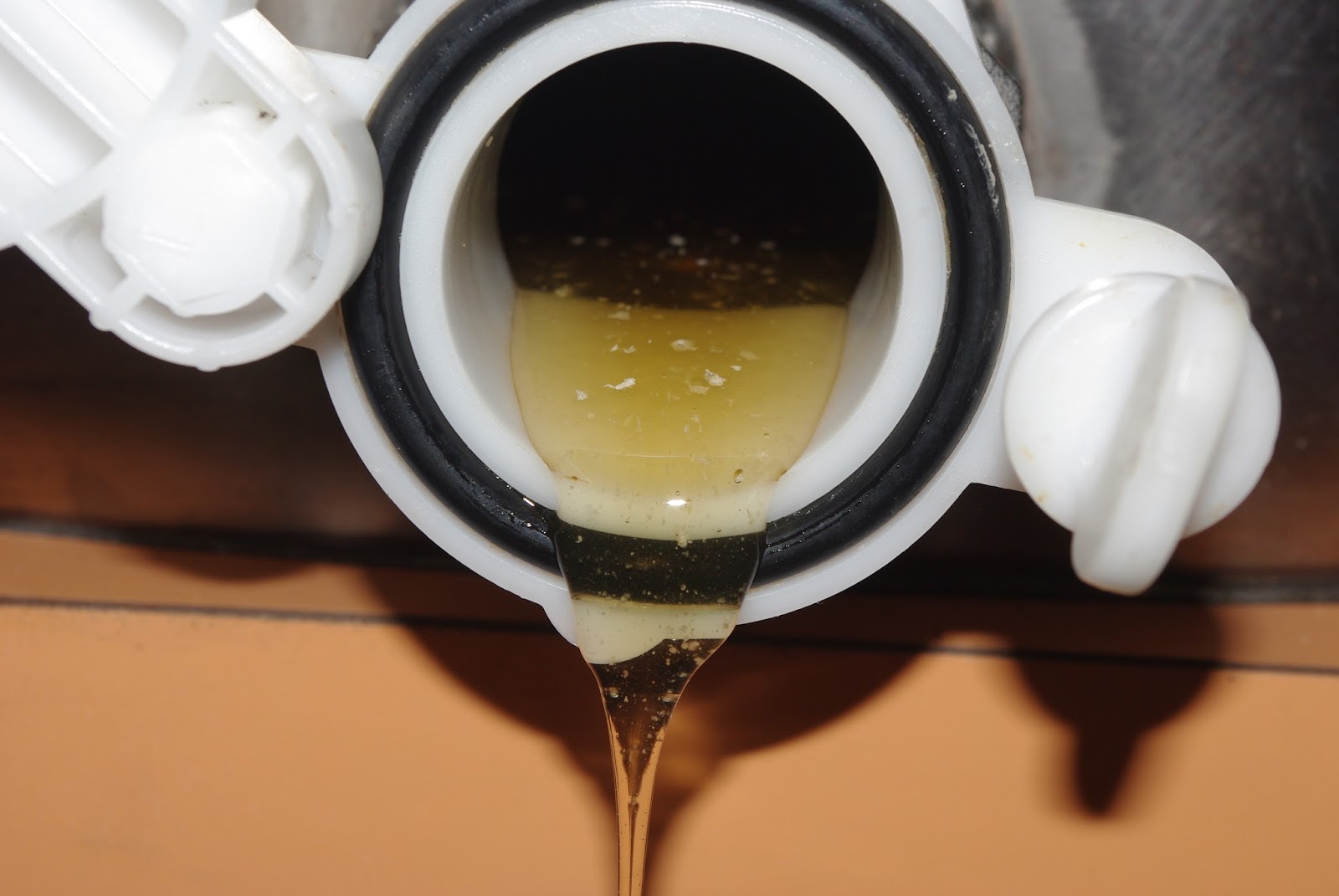
Here comes the honey. The white flecks are wax from the comb
totally harmless (actually, very healthy) so we filter it out. 

I don't always put honey in my tea, but when
I do, it is fresh from the hive! 

Full Ross Round frames!!

This is the honey in the comb, a delicious delicacy. (Ross Rounds)

This is a very full frame of honey, the first of many!


Sunday, July 17, 2016

Waxing Poetic

It’s been a busy summer so far, with very weird weather, but we finally found a few minutes to do a bee update!
Removing the partition from a Queen Castle to turn it into
one standard hive.
We have some results on our queen castles – the hives where we put three small nucs into one box. Two weeks ago we cracked them open to see how everyone was doing. On three of the castles, only one nuc per hive survived. On one of these nucs, we could see the queen had not hatched. On others, there were bees working but no queen laying eggs. Fortunately though, one nuc in each hive was thriving, so we just removed the partitions and turned them into regular hives with 10 frames each. This weekend, we checked those hives again and all but one are doing marvelously. We have even added a honey super to a one of them! Another of the castles, when we opened it, had all three nucs thriving. The bees are laying brood and bringing in honey, so next week we will be splitting them up into their own boxes.

Examining the brood pattern from one of our Kona Queen
Hives. Lots of bees and lots of capped brood!
We also have been seeing amazing results from our Kona Queens from Hawaii. The hives are bursting with bees, and are they producing honey! The three hives have produced more already this year than we had from all our hives the first year with the apiary. All of the ones in our yard now have 3 honey supers on them! For one of them, we have added a special honey super. Instead of giving them frames to store the honey, this one has round openings, about the size of hockey pucks, for them to fill with wax and honey. When we harvest, we simply pop the pucks out and put them in containers, selling the honey in the wax. It’s even healthier that way and a popular treat for many people. We’re excited to see them doing such a good job filling in the ‘Ross Rounds’ and will be looking at doing much more of this next year.

Building lots of burr comb on the lid of their hive.
Although it’s late in the year, with all the rainy and cool weather it seems the bees have gotten a bit discombobulated. We received a call this weekend about a swarm in someone’s yard. This is our fourth swarm to pick up this year – this one was big and about 20 feet up a pine tree. We managed to gather them though, and two days later these bees are doing orientation flights at the door of their hive already. The bees in this colony are very distinctive – they are much more yellow than ours, and have a lot more attitude.

Two of the other swarm hives are doing well, and in fact one of them now also has a super on them for honey. The last one unfortunately didn’t work out. We’re still very happy with the three new hives; they were a welcome bonus addition.

Inside the Flow Hives. Social media loves this hive.
Sadly, our bees don't. :(
The Flow Hive. *sigh* For some reason, our bees do not like the Flow Hive. We had it on a strong hive for over a month and that hive swarmed twice rather than go up into the Flow Hive. We moved it to another strong hive that had some partially full honey supers on it, but the bees would rather fill anything else, and are avoiding it completely. Next week, we will put it onto one of the hives with the Hawaiian queens, removing the full honey supers and giving them just this and a partially full super, and hopefully they will start to put something into it. It was easier getting them to do the work in the empty Ross Rounds with no frames at all than it is to go into the Flow Hive.

Checking a frame of brood. The bees were very active
this day, but the sun was shining so everyone was happy.
Our inspections have been rather spotty over the last month, because the weather has not been cooperating. They do not like to be opened when it’s cloudy – most of the bees are in there instead of out gathering pollen, so it’s full and they get a bit crabby. We cannot inspect hives when it’s windy or, obviously, when it’s raining, so it has limited us quite a bit on when we can see what they’re up to. The hives in the second yard are definitely in need of some TLC. That will happen next week. Also next week, 12 hives will be re-queened with new, local queen cells. Hopefully we will have nice weather, because they clearly did not like being checked today.

Messy, messy, messy! This is what happens when we forget
to give them something to build on!

We also pulled a frame from one of the hives two weeks ago. It was a mess! We had miscounted the frames when we closed it up, giving them 9 instead of 10. The result was that the bees decided to be creative, filling in the extra space themselves. One of the Queen Castles, as well, was missing a frame. They built their own, attaching it to the roof of the hive and filling it with honey and brood. I suppose, in the bee world, it’s a work of art, but I would rather see them putting that sort of energy into filling more Ross Rounds.


Another example of the bees taking initiative! They didn't have
a frame so they just created the frame themselves, building
it out of wax and filling it with honey.

Saturday, May 28, 2016

There’s Another and Another and Another...

Our 'Swarmy' Hive.. doing very well, thank you!

When we talk bees, we tend to talk in big numbers. There can be anywhere from 10,000 to 60,000 bees in a hive (they typically start at 10,000 when you purchase a ‘package’ of bees). We can go through 100 pounds of sugar in no time, and we get several hundred pounds of honey... and that’s just with a few hives. Hives, however? Now that is something we can count, and our numbers are growing.


A queen castle with three separate nuc chambers.


After the excitement of the swarm earlier this week (yes, all our bees are back home, in a new hive box, and doing swimmingly!) we decided we needed to be a bit more proactive in what we are doing. As we said last time, we ended up with the swarmed hive back as a new hive, we used some of the other swarm cells in that same Mellow Yellow hive to create two new nucs, and we had already split one hive because it was getting too full and we had a spare queen. That put us four ahead.


A Queen cell without the protector.


Today, we added 10 new queen cells, to create 10 more new hives! That would mean we went from 7 to 21 in two months (if they all work). We definitely can’t complain about that! We had hoped to be able to just add some new queens, but there is a shortage of queens. They are definitely a hot ticket item (and one that we will have to research more so we can start to create our own queen cells). The advantage of adding a queen, as opposed to a queen cell, is that when you purchase a queen, she is ‘proven’, meaning she has taken her maiden flight, and has already started to produce eggs. We could also purchase ‘virgin’ queens, which have been hatched and are alive, but still have
The Queen cell with the protective cover in place.
to leave the hive to do a maiden flight, so could fall prey to a bird or other hazard. When you get a cell, although much less expensive, there is no guarantee of what will come out of there when she finally emerges. The supplier for our queen cells, however, is local, and has a very good success rate with his queens, so we are fairly comfortable trying this route.

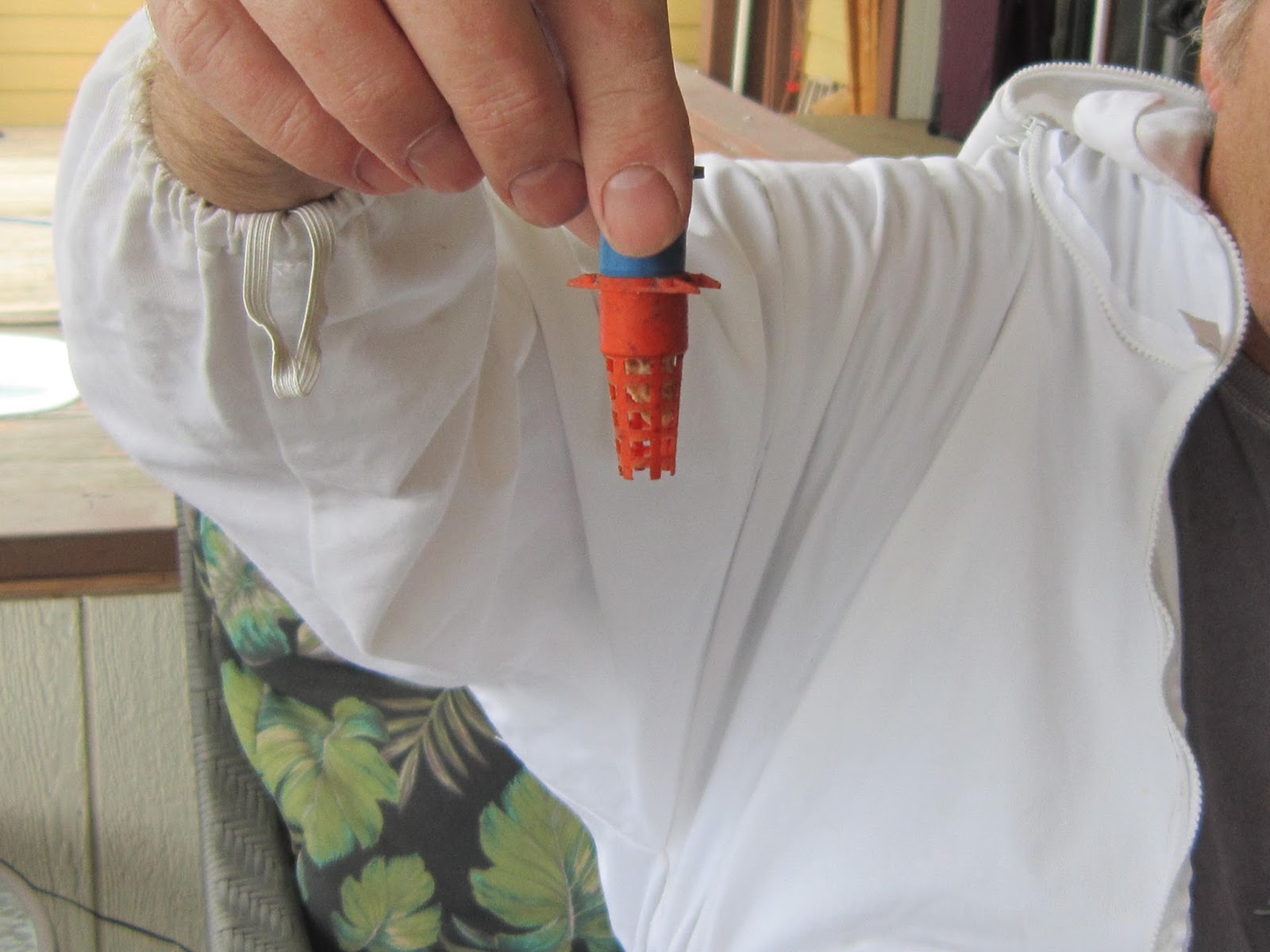
While some beekeepers are comfortable just dropping a queen cell into an established hive, we didn’t want to do that, especially since we have just added some new queens to the hives. Instead, we went a different route, taking some capped brood from some hives, some honey from others, and, of course, a smattering of bees to attend the queen, the honey supply and the eggs. They are the elongated cells just like you would see on the frames of brood, but they are alone. We put them into little cages that allow the queen to emerge, but that will prevent anyone else from hurting her, should a queen somehow have slipped past us.

Putting the Queen cell into the Queen Castle nuc.
For practicality purposes, we do not want to use one of the big hive boxes (’10 frame deeps’) for this, because it would give them way too much room to be rattling around in. That much space is hard to keep warm if the temperatures drop, and has too much space inside to cool if the temperatures outside spike. Temperature is very important in the production of bee cells, but fortunately the bees know what to do to maintain it where it should be – we just want to make it as easy as possible for them so they are able to do other things, like make honey and tend to brood. For this reason, we need to start with smaller hives and/or smaller frames. Our compromise to that is to use the same sized frames, but to use only three of them per nuc and to separate the box into three equal pieces (called ‘queen castles’). This means we can put three frames into each nuc. One frame will have food on it – syrup, pollen, honey. This is important because we have to lock all the bees in for five days, ensuring that the foraging bees will not just return to their old hive. One frame will have some capped brood, so that the new brood will hatch and strengthen the hive. We will also include all the bees that were on the frame of brood. This will give them plenty of time and potential to establish a strong hive. 

Closing the lid on one of the three Queen Castle chambers.
Once we open the doors again, the foragers will re-orient to their new hive, returning to it with their provisions. The queen should have hatched by then, and will go on her maiden flight, and within two weeks from today, we should have hives that are abuzz with activity and life. That’s the plan, anyway.

We’ll know in two weeks if it worked. An 80% success rate (meaning hopefully for us 8 new hives) would be a huge win. 


Always have the smoker handy!