Showing posts with label Queen cells. Show all posts

Sunday, January 15, 2017

Looking Ahead to 2017

Our hives in the new apiary, covered with snow but sitting
in the sunshine. 
It was a very busy fall for us. Our first priority for the fall was to move the bees to the new apiary. It has lots of room for growth, and we can park a trailer in there as well, which is the long term plan – then we can keep some bees on the trailer, and move them from orchard to orchard, getting that wonderful fruit pollen. It makes amazing honey. For the move, the hives were loaded up on the back of the truck, the tables were hauled over (we don’t like to have the hives directly on the ground because then they are just too inviting to bugs and critters who might have a hankering for some bees – yes, we mean skunks. They don’t care about the honey but they sure do love bees… and not in the good way.)

Taking the honey from the FlowHive
We also extracted our honey… lots of honey. When all was said and done, we ended up with about 1100 pounds of honey. If that sounds like a lot, you want to try to store it all in your kitchen pantry! Like all things, there was still some learning this year in the extraction department. We harvested our FlowHive for the first time, with mixed results – it was a very messy process! We also harvested 32 pucks of honey in the comb, and were very happy with that. With a little bit of that extracted honey, we did all our preserves and especially our jellies, using less than a cup of honey per batch instead of the many cups of sugar normally used, and it turned out wonderfully.

Moving the hives to the new apiary.
So, what about 2017? The hives are topped with snow, the bees are inside making sure the hive stays at the right temperature, and we are pondering the next honey season. As always, it seems, there are hive boxes and honey supers to be made. That is a never-ending task, it seems, as we grow. Since we hadn’t anticipated the growth we had last year, we used up every available box and frame, so there is work to be done there. We need to make our ‘shopping list’ of necessities – like queen excluders, calculating as best we can how many hives we will aim for next year. It’s hard to anticipate because so much depends on the winter. This winter has been very cold, unusually cold, with a lot of wind, so we could find that the hives are not as strong in the spring as we hoped. We also had a long fall, so they could have depleted a lot of their stores before the cold weather came. We also are over-wintering with single hives, instead of doubles, so there will be less stores for them to rely on inside.

Our honey in the comb, ready for sale. 
Without knowing what we have when we start the year, we almost require a couple of contingency plans. If the bees do well, and they are up and running strong early in the spring, we will have to decide if the focus will be on creating more hives, or creating honey, and if we go with creating honey, do we do more liquid honey or honey in the comb? We can also focus a bit more on gathering propolis and pollen instead of just honey, or we can decide to create hives to sell for other beekeepers, spreading diversity and helping new beekeepers get established. Regardless of what route we take, we know we have to re-queen the hives which raises the question of ‘growing’ our own queens or purchasing queens. We learned from last year that to purchase queen cells are much cheaper, but much more of a gamble. The growing of queen cells is an involved and intricate art, requiring a careful hand at the start when the harvest the day-old larvae, and absolute vigilance in monitoring and timing their growth to be able to move them appropriately at the right time. Being off even one day has dire consequences, so we need to be sure of what we’re doing and when we’re doing it. The learning curve on this task is, honestly, a bit intimidating, but the benefits, especially for our own hives, would be substantial.

University of Purdue -- growing queen cells. 
We have to look beyond these issues though, and consider what we do with what our bees produce. Selling hive nucs and queens are one way to make this gig pay, but are those enough or do they deplete our own ability to produce honey? We have been selling our honey, by the jar, by the puck and by the bucket, but is there more we can be doing? We have gathered a lot of beeswax over the last few years, so perhaps it’s time to find a use for that, something that will help to make this more than just an interesting hobby.


When you have angry bees because you have
just taken away all their honey, you have
to get creative when working outside.
Greg is geared up to do some welding,
while wearing a bee suit! 
So while we sit and ponder, and dream of sunshine and flowers for our bees, we will have more than enough to keep us busy (besides just making new hive boxes). We will pull out the aprons and the pots, and do some experimenting with the many wonderful by-products of bees, integrating the wax and hopefully the pollen and propolis, so more people can reap the benefits. At this point, at least for a few more weeks, the evenings will be spent reading and researching. The days inside the house will be spent testing and sampling. We’ll try to share some of the results as we go. It could be an interesting (and messy) journey. 

Tuesday, July 26, 2016

Live From The Honey House!


Deep boxes and frames ready for creating new hives


Well, okay, the honey house is in our dreams, but one day...!

It’s been a busy week with the bees. On Saturday, we had to prepare the hives for re-queening. This year, we are trying to requeen with queen cells, rather than using proven queens. It just stretches our ability a bit further, and since we have a wonderful source for queen cells right now, we will use it.

Unloading full honey supers from the second bee yard.

Preparation meant cleaning out the queen castles that we had prepared in the spring, moving those hives to the large deep boxes so they can have a regular hive, and getting some new frames from some of the other hives, including the Hawaiians, to use as a foundation for the queen castles again. Doing this will add to the number of hives we have once more – essentially creating splits. When we clean out the queen castles, we open one nuc at a time. These nucs consist of three frames each. We check them to see that there is new brood on the frames; this means there is an active queen in that nuc. We check the pattern she is using for laying her eggs – we want to see almost every cell filled with larvae, with the odd open spot. Too many open spots or random clumps means that she is not as strong as she should be.

One-way screens allow the bees to get out of the honey super,
but not back in.

We take those three frames and move them into a separate deep box, add some more empty frames (preferably ones that have already got some built up comb on them, though) and those hives are ready to go. The three-frame area is just not big enough, so now they will have room to grow.


With the queen castles empty, we then went to the other hives that were already established. They need to be checked regularly anyway, so now was the time (despite the bees being especially peeved at us, and letting us know! It was a 9-sting week!). Hives that were especially strong donated one or two frames to restock the queen castles. We added queen cells to those queen castle nucs the next day and will check them in about a week. Hives that were not as strong donated more frames to the castles and were marked to get a new queen as well. We had three of those, and the queen cells were put in on Sunday.

Hot days and crowded hives lead to
a lot of bearding on the outside.


While we were out there getting stung anyway, we decided to put in the one-way screens between the honey supers and the hives. This would allow the bees in the super to get out, but no more would be able to go back in, leaving them empty (or almost empty) for us to extract the honey. We pulled the supers and set them in the shop to warm up, making extraction easier. We also pulled and extracted the Ross Rounds; our bees did a beautiful job of these, and we are very excited to have more next year.

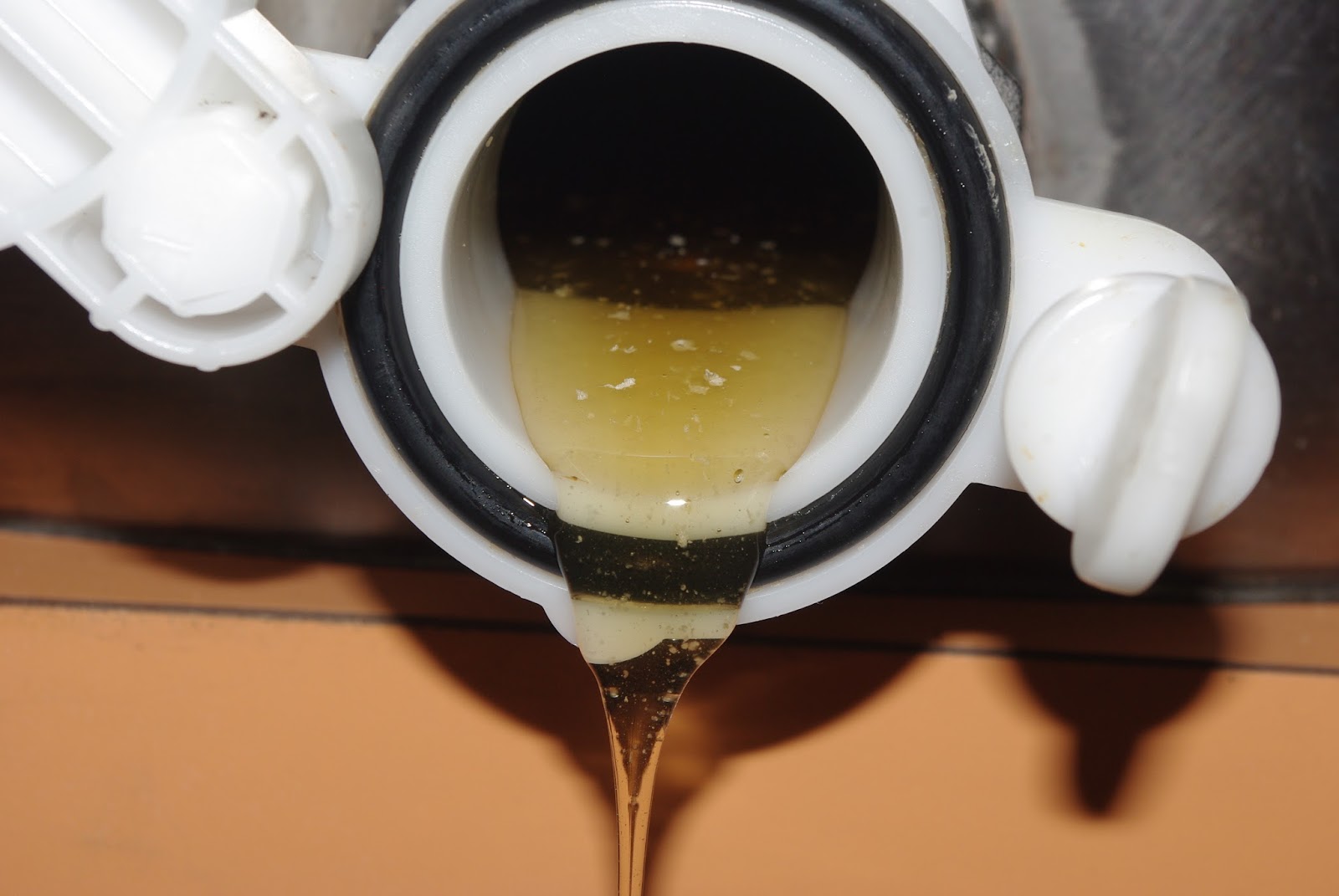
Extraction was earlier this year than last, (mostly because we ran out of honey supers so had to empty what we could so they can go back on the hives) and the end product is incredible. The honey has a wonderful dark color and a rich taste with locust and floral undertones. It runs nicely, and is nowhere near as thick as last year – thankfully – because of the less arid conditions this year. The bees and Mother Nature were smiling on us in 2016.

We will have one more extraction to do later in the year, hopefully, so our honey buckets are full again! Woo hoo! 

Here comes the honey. The white flecks are wax from the comb
totally harmless (actually, very healthy) so we filter it out. 

I don't always put honey in my tea, but when
I do, it is fresh from the hive! 

Full Ross Round frames!!

This is the honey in the comb, a delicious delicacy. (Ross Rounds)

This is a very full frame of honey, the first of many!


Saturday, May 28, 2016

There’s Another and Another and Another...

Our 'Swarmy' Hive.. doing very well, thank you!

When we talk bees, we tend to talk in big numbers. There can be anywhere from 10,000 to 60,000 bees in a hive (they typically start at 10,000 when you purchase a ‘package’ of bees). We can go through 100 pounds of sugar in no time, and we get several hundred pounds of honey... and that’s just with a few hives. Hives, however? Now that is something we can count, and our numbers are growing.


A queen castle with three separate nuc chambers.


After the excitement of the swarm earlier this week (yes, all our bees are back home, in a new hive box, and doing swimmingly!) we decided we needed to be a bit more proactive in what we are doing. As we said last time, we ended up with the swarmed hive back as a new hive, we used some of the other swarm cells in that same Mellow Yellow hive to create two new nucs, and we had already split one hive because it was getting too full and we had a spare queen. That put us four ahead.


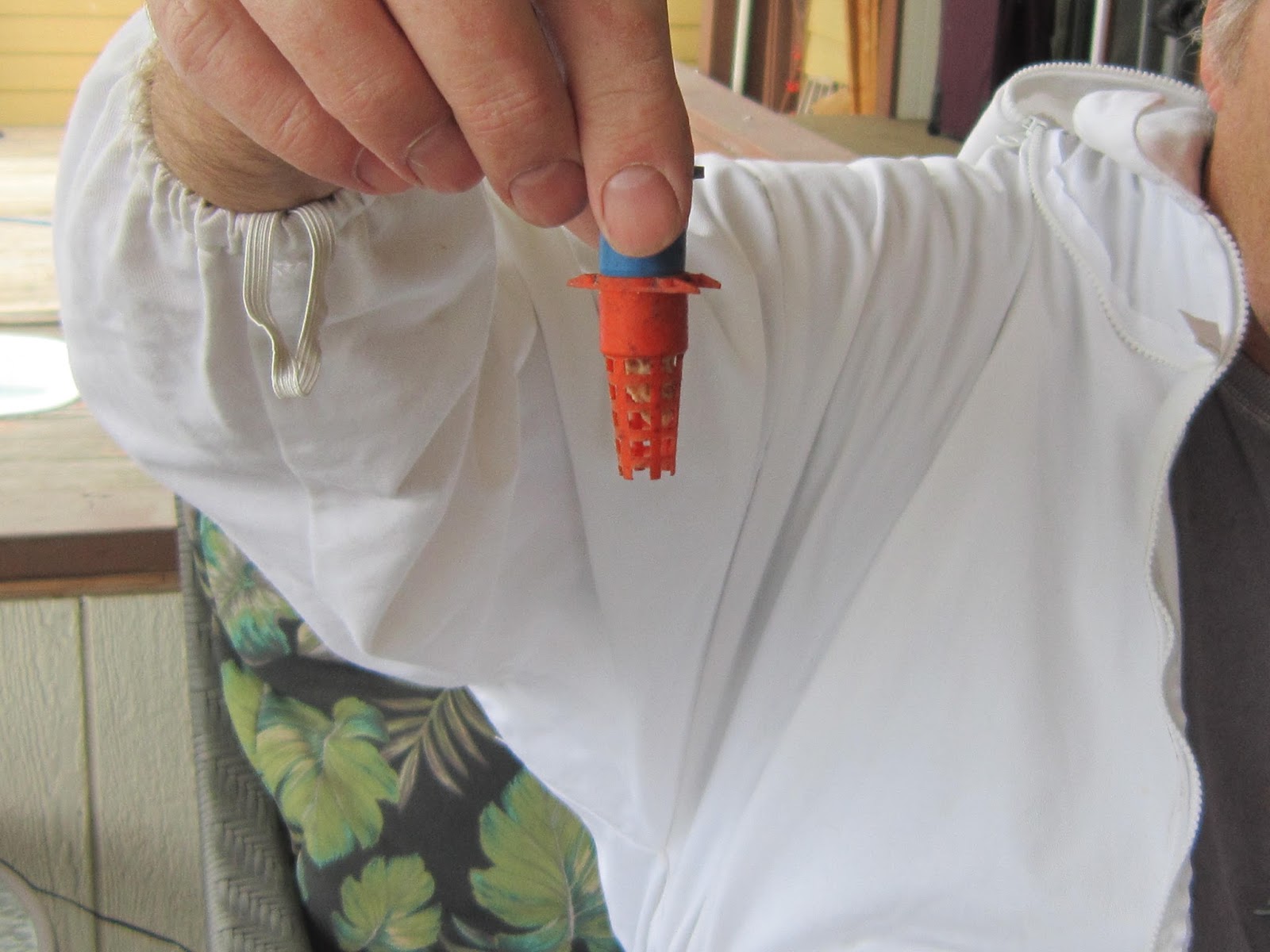
A Queen cell without the protector.


Today, we added 10 new queen cells, to create 10 more new hives! That would mean we went from 7 to 21 in two months (if they all work). We definitely can’t complain about that! We had hoped to be able to just add some new queens, but there is a shortage of queens. They are definitely a hot ticket item (and one that we will have to research more so we can start to create our own queen cells). The advantage of adding a queen, as opposed to a queen cell, is that when you purchase a queen, she is ‘proven’, meaning she has taken her maiden flight, and has already started to produce eggs. We could also purchase ‘virgin’ queens, which have been hatched and are alive, but still have
The Queen cell with the protective cover in place.
to leave the hive to do a maiden flight, so could fall prey to a bird or other hazard. When you get a cell, although much less expensive, there is no guarantee of what will come out of there when she finally emerges. The supplier for our queen cells, however, is local, and has a very good success rate with his queens, so we are fairly comfortable trying this route.

While some beekeepers are comfortable just dropping a queen cell into an established hive, we didn’t want to do that, especially since we have just added some new queens to the hives. Instead, we went a different route, taking some capped brood from some hives, some honey from others, and, of course, a smattering of bees to attend the queen, the honey supply and the eggs. They are the elongated cells just like you would see on the frames of brood, but they are alone. We put them into little cages that allow the queen to emerge, but that will prevent anyone else from hurting her, should a queen somehow have slipped past us.

Putting the Queen cell into the Queen Castle nuc.
For practicality purposes, we do not want to use one of the big hive boxes (’10 frame deeps’) for this, because it would give them way too much room to be rattling around in. That much space is hard to keep warm if the temperatures drop, and has too much space inside to cool if the temperatures outside spike. Temperature is very important in the production of bee cells, but fortunately the bees know what to do to maintain it where it should be – we just want to make it as easy as possible for them so they are able to do other things, like make honey and tend to brood. For this reason, we need to start with smaller hives and/or smaller frames. Our compromise to that is to use the same sized frames, but to use only three of them per nuc and to separate the box into three equal pieces (called ‘queen castles’). This means we can put three frames into each nuc. One frame will have food on it – syrup, pollen, honey. This is important because we have to lock all the bees in for five days, ensuring that the foraging bees will not just return to their old hive. One frame will have some capped brood, so that the new brood will hatch and strengthen the hive. We will also include all the bees that were on the frame of brood. This will give them plenty of time and potential to establish a strong hive. 

Closing the lid on one of the three Queen Castle chambers.
Once we open the doors again, the foragers will re-orient to their new hive, returning to it with their provisions. The queen should have hatched by then, and will go on her maiden flight, and within two weeks from today, we should have hives that are abuzz with activity and life. That’s the plan, anyway.

We’ll know in two weeks if it worked. An 80% success rate (meaning hopefully for us 8 new hives) would be a huge win. 


Always have the smoker handy! 

Sunday, August 10, 2014

Gimme A High Five!!

Wow, we have a lot of catching up to do! It’s been hot and while a number of beekeepers are saying their hives are slowing down and they are supplementing food, we are still doing okay. There are a lot of alfalfa fields around us in bloom now, and apparently bees like sunflowers, and we have a LOT of them. The other thing we have, though, is a bear nosing around, so we’re getting ready to deal with that. For now, we have a radio (talk radio station) playing all night to keep him hopefully away. There are a lot of berries and a ton of fruit on the trees so hopefully he likes that better. It would certainly be easier for him to eat.

Last week we found that Gang Green had only one frame empty, and they were laying lots of babies, so we added a second box to their hive this week. We removed a lot of burr comb at the top and swapped a couple of frames from the bottom to the new top box to encourage them to move up. We shimmed the lid to give them a bit more air movement in the heat, and we will now see how they do. Considering how late the hive was started, we aren’t going to complain.

Pistachio had already made use of their second box, and had only the outside frames left to use. We swapped them to the middle, and this week we added their honey super box. In the intense heat we’ve been having, this is our only hive to beard – they collect in a huge pile stuck to the front of the hive... hanging there like a beard. We’ll try to get pics this week of it.

The Dregs... the poor poor dregs. Last week there was one frame with brood that we moved to the top box, and there was no other activity there. The bottom box had two frames of capped brood. Today we found queen cells on one frame in the bottom box. We also found one frame with a lot – A LOT – of drone cells. Obviously they need a new queen, so there has been no new brood, and there are a lot of empty frames. We changed to a smaller entrance way with them.


The Moody Blues have been busy bees. Last week they had filled all but one frame in their top box, not with brood but with honey. This week, because they were still at it, and because they had a ton of burr comb on top of the hive, we added a honey super for them.

The White Outs last week had seven frames of honey in their honey super, although nothing was capped. Today, like the Moody Blues, they had a lot of burr comb, and they had the honey super just about full, so we added another honey super for them. When we added it, we put it under the first honey super, so they will be more inclined to go to it now.

Team Tangerine – well, everyone has that one that they worry about, and I guess that’s Team Tangerine for us. We had added a honey super already, but last week there was nothing in it. They had four frames of capped larvae in the second box though, so we were hopeful. Today we took a lot of burr comb from the top of the second box. We swapped out a drone frame for a regular frame. They had some capped and uncapped brood, so we moved the outer frames that hadn’t been used yet into the middle. If this hive survives the winter, we will probably be looking for a new Queen for it come spring.


To end on a high note – really high.... high five, in fact – we added a third (yes, THIRD) Honey super to the Mellow Yellows. They are quite mellow, and gentle, for bees, but man, do they work! Last week the top honey super had 5 full frames of honey. The second honey super was full – it weighs over 30 pounds! – and we swapped the two supers around. Today, they had lots of burr comb that absolutely dripped with honey because they only had three frames left unused. Gotta love those Mellow Yellows! 


Friday, June 27, 2014

Schrodinger's Bees?


The Dregs, sitting and chilling on their front porch.

It's been five days, and we just couldn't wait. Bees were coming, bees were going, which was good, but not enough to satisfy our curiosity. We needed to know what was going on inside The Dregs. This is the one problem with bees and beehives -- you can't see inside them without lifting the lid. Like the famous cat of Schrodinger fame, they could be alive or dead, but without looking in the box, we would never really know.


Lots of capped brood and Queen cells at the bottom.
Once everyone was suited up, that was exactly what we did -- and we could not beelieve what we saw! We were hoping that by taking uncapped brood from other hives, the new hive would be able to create some Queen cells so they would have the required egg-layer to keep the hive alive. Alive? That would be an understatement! They did create a Queen cell... then another... then another. Actually, we counted 27 Queen cells on the middle four frames, and they have been working on every frame in the hive. They also went through all their juice; it was bone dry. The Queen cells are distinctive because of their long shape and bigger size. Usually the brood cells are capped flush with the frame. Only one Queen will go on to rule the hive. When she comes out of her cell, she will chew through the other Queen cells and kill the growing Queens inside. The Queen in this hive will spend a lot of time chewing those other cells!

Textbook Queen cell on the bottom right end... the really long one!
So, now comes the new dilemma. Do we try to split it again, taking the three frames with Queen cells and putting them into a hive each, robbing some brood and eggs from the other hives, or do we not get greedy in the creation of new hives? We were more than content to end the year with 5, especially considering that we had only planned on 3 when we started out. We already are up one -- a bonus hive. Do we push our luck and see if we can take this year to establish the hives, then let them do their honey thing in full force next year? Looking out the window and seeing the rain, I can't imagine the bees will want to be doing much of anything in this cold, so perhaps letting them make a new hive or two might not be a bad idea after all.
More hired help. They will eventually get paid... in honey.
More Queen cells, these all over the frame. The bees will pick any cell that has an egg that is the right age when they don't have a Queen. 

Sunday, June 15, 2014

More NooBees Are Here


Yes, they arrived last week… the Moody Blues, Pistachios, and the White Outs. These are our first nuc hives – they are made of cells started in other hives, where the Queen is established. The frames are transferred into the new hive, complete with queen, to set up a new colony. This is supposed to be a faster way to establish a colony, so it will be interesting to see how they do in comparison to the other two already here. These bees have many generations of being bred locally and are supposed to be well adapted to our environment.


The bees in the new hives seem… different. We wouldn’t say they are more aggressive, but perhaps a bit easier to excite. They certainly let you know that they don’t really appreciate you peeking into their hives. They were set up with protein pads and juice, and we’ll see how they do. As happened with the first two hives, there is one that seems stronger (The White Outs) and one that seems to be lagging (Pistachios), but as we’ve learned from Mellow Yellow and Team Tangerine, they tend to do things their own way in each hive, at least a little bit, so we count no one out yet, even if they seem a bit slower coming out of the gates.

When we checked on Team Tangerine, we found an interesting (and perhaps concerning and perplexing at the time) discovery. There were some ‘new’ cells at the bottom of a middle frame, longer and much bigger than the other larvae cells. There were three of them, which removed any doubt about what they were – new Queen cells. Team Tangerine wanted, or needed, a new Queen, so they set to work and created one. By the time we found them, all three were opened. When the hive does this, it’s because there is a problem with the Queen – she is too old, she is sick, she isn’t able to lay eggs… so the hive, knowing that the Queen is vital to survival, takes matters into their own hands. The new Queen, when she hatches, will eat her way out of the cell. She then goes to the other two Queen cells, rips them open and kills the Queens in them. She then has to go on a ‘mating flight’ outside the hive… she finds drones from another hive to mate with. This is the only time she will leave the hive. Once she returns, she will spend the rest of her life laying eggs.

While all this has been happening, we noticed that there was no egg production in the hive (since there wasn’t a laying Queen for about two weeks). Instead, because bees are nothing if not busy, they have put all their energy into creating honey. Though they were lagging behind The Mellow Yellows in bee production, they are leaving MY in the dust when it comes to filling their comb with sweet wonderful honey. Some of the frames, when lifted, are nearing 20 pounds in weight with bees and honey.

The discovery of the Queen cells was disconcerting because it can be an indicator that the hive is about to swarm, leaving here and finding new digs to call home. All evidence though indicates that this was because they needed a new Queen, and it was done with typical bee-ish textbook proficiency.


As for the Mellow Yellows, they grew into a third box. Yes, we have our first honey super, three boxes high, with the top box waiting to be filled with nothing but honey, just in time for peak honey production season. 


Here is the Queen cell. You can see how she chewed a flap open so she could get out. She then ripped open the other two so she could kill the Queens developing in them


LOTS of bees now in this hive!